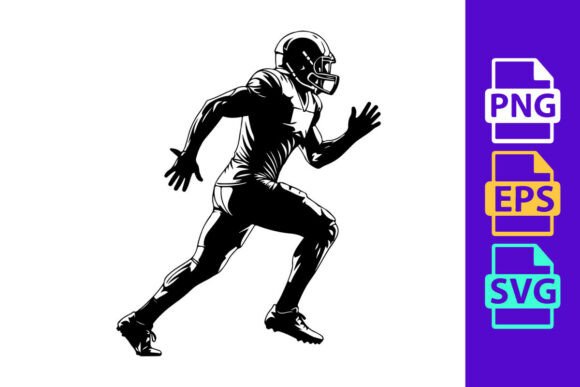
American Football Player in Motion Runni: Dynamic Design Assets
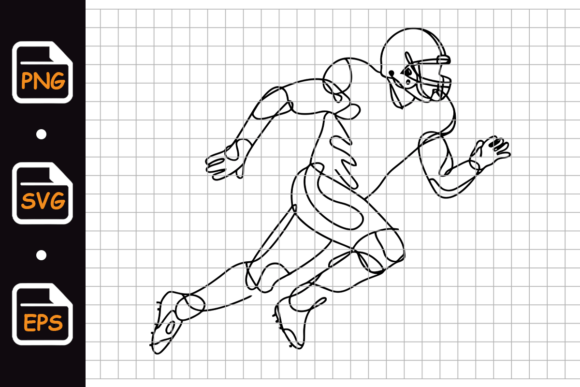
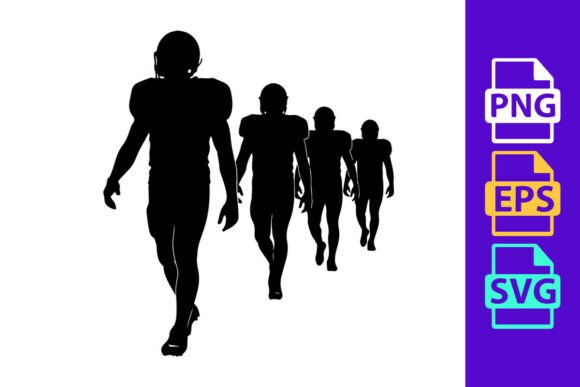
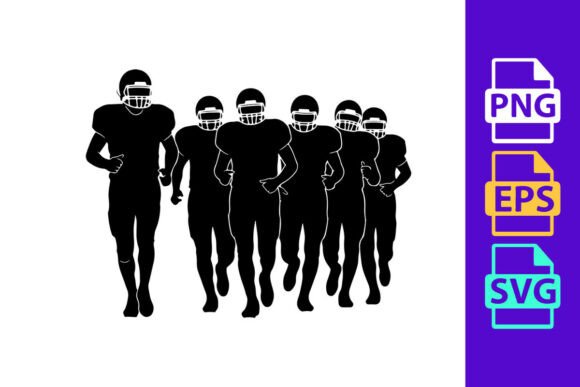
In the world of visual design, static elements often struggle to convey the true energy of a subject. However, when you introduce a piece like the American Football Player in Motion Runni into your toolkit, you immediately bridge the gap between a flat image and a feeling of kinetic power. This isn't just a generic sports graphic; it is a carefully constructed vector silhouette that captures the explosive moment of a player sprinting downfield. The appeal lies in its simplicity and boldness. By stripping away the details of a jersey or a face and focusing on the negative space and the lean of the body, the design speaks a universal language of athleticism and determination.
Visually, the character of this silhouette is defined by its clean lines and balanced weight. It avoids the jagged edges or pixelation often found in lower-quality raster images, presenting instead a smooth, professional contour that commands attention. Whether you are working with a dark background or a light one, the shape holds its own, creating a distinct profile that is instantly recognizable. It fits perfectly within a modern typography or graphic design context where the goal is to communicate action without clutter. For designers, this asset serves as a versatile anchor point, capable of grounding a layout or serving as a focal point for a broader brand identity in the sports niche.
Strategic Applications in Branding and Marketing
Understanding where to deploy the American Football Player in Motion Runni is key to maximizing its impact. This asset is not limited to just one medium; its scalability makes it a powerhouse across various platforms. If you are a small business owner or an entrepreneur launching a sports apparel line, this vector file is ideal for t-shirt and apparel design. The clean silhouette ensures that the print quality remains high, even when scaled up for large-format printing on the back of a hoodie or downsized for a chest pocket logo.
For those in social media graphics and digital marketing, the file’s transparent background (in PNG format) allows for seamless layering over photos, textures, or solid color blocks. Imagine creating an Instagram story or a Facebook banner for a local team; the motion of the player adds immediate visual interest that stops the scroll. Furthermore, in the realm of packaging design for sports drinks, protein bars, or athletic gear, this silhouette can reinforce the product's purpose. It tells the customer, "This is for performance," before they even read the label copy. It is a prime example of a design asset that enhances brand perception by associating the product with energy and success.
Technical Flexibility and File Formats
One of the most practical aspects of the American Football Player in Motion Runni is the suite of file formats included. You receive high-resolution PNGs, fully scalable SVGs, and editable EPS files. This variety is crucial for maintaining professionalism across different workflows. The SVG and EPS formats are vector-based, meaning you can scale the image to the size of a billboard without losing a single pixel of quality. This is essential for print-on-demand products and large-scale sports posters and banners.
Conversely, the 300 DPI PNG file is optimized for immediate use in software like Canva or Adobe Photoshop, where quick edits and layering are necessary. The ability to easily customize and recolor the vector files means you can match the player’s silhouette to any specific team palette or corporate color scheme. This level of customization ensures that the asset feels native to your specific project rather than like an afterthought. Whether you are creating sticker and decal designs or D-I-Y crafts, the technical robustness of these files ensures a smooth creative process.
Enhancing Visual Hierarchy and Audience Engagement
In editorial design and web design, the use of strong visual anchors is vital for guiding the reader's eye. The American Football Player in Motion Runni acts as a powerful tool for establishing visual hierarchy. By placing this dynamic figure near a headline or a call-to-action, you draw attention to the most important information on the page. The human eye is naturally attracted to figures in motion, making this silhouette a psychological hook that increases audience engagement.
Consider its use in logo design or team merchandise. A logo needs to be memorable and distinct. Incorporating this silhouette can add a layer of storytelling to a brand mark, suggesting progress, speed, and victory. It moves beyond the static nature of many standard icons. When paired with the right serif font for a traditional look or a bold sans serif font for a contemporary edge, the silhouette helps create a cohesive visual narrative. It proves that a single, well-designed element can significantly elevate the perceived value of a project, turning a simple flyer or website into a compelling piece of visual communication.
Practical Integration and Design Pairings
Successfully integrating the American Football Player in Motion Runni requires a thoughtful approach to layout and font pairing. Because the silhouette is bold and graphic, it pairs best with typefaces that have a strong presence. A heavy display font or a robust slab serif can match the weight of the image, creating a balanced and grounded composition. Conversely, using a clean sans serif font can provide a sleek, modern contrast that highlights the fluidity of the player's movement.
When applying this to real-world projects, always consider the context. For a youth sports league, the image might be used alongside playful, rounded typography and bright, energetic colors. For a high-performance athletic brand, the silhouette might be rendered in monochrome—black on white or white on black—to emphasize sleekness and power. This versatility is what makes it a premium font and graphic resource. It adapts to the designer's intent, whether the goal is to inspire young athletes or to market high-end gear. By treating the silhouette not just as a picture but as a structural component of your design, you can create layouts that are both visually stunning and functionally effective.